
Key Takeaways:
- Menopause affects more than just hormones. It can influence sleep, mood, energy, and daily comfort in ways that differ from person to person.
- Symptoms such as heat sensations, restlessness, and fatigue may reflect broader internal patterns rather than isolated issues.
- Traditional Chinese medicine views this phase as a gradual shift in balance, often linked to patterns like internal heat, reduced fluid nourishment, or emotional tension.
- Acupuncture for menopause is used as part of a wider approach, supporting the body’s adjustment over time rather than targeting a single symptom.
- A more complete assessment matters. Some symptoms may overlap with other health conditions, so persistent or unusual changes should be reviewed alongside supportive care.
Navigating Change: A Closer Look at Menopause Symptoms
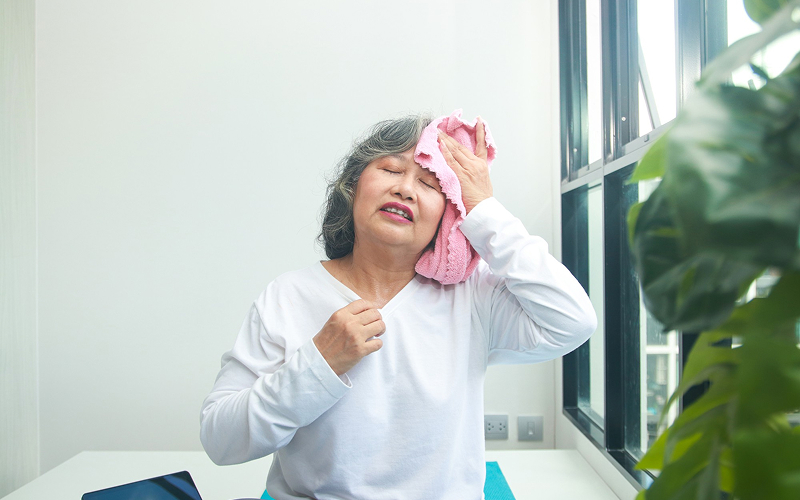
Menopause does not always present clearly. It often starts subtly, then changes unpredictably. One month might feel manageable, only for sleep to suddenly lighten, warmth to surge unexpectedly, or emotions to feel more raw. This can be unsettling, as if the body is marching to an unfamiliar beat.
For many women, these shifts extend beyond the purely physical. Energy levels may dip, focus can become scattered, and even routine daily tasks might demand more effort.
In recent years, more women have started exploring acupuncture for menopause. Many are drawn to it, not seeking a quick fix but rather a steadier, grounded approach to navigating this transition. Rather than isolating individual symptoms, this holistic approach considers how everything interconnects, from sleep patterns and mood to the body’s regulation of heat and recuperation.
What Happens During Menopause and Why It Feels So Different for Everyone
Menopause is driven by hormonal shifts, especially changes in oestrogen, which affect how the body regulates temperature, sleep, and mood. While some women experience only mild changes during this transition, others may contend with disrupted sleep, irritability, and persistent fatigue. Episodes of warmth or flushing often become more pronounced, leading some women to explore options such as acupuncture for hot flushes as part of managing these changes.
Indeed, no two experiences are quite the same. Daily habits, stress levels, and overall health all influence how the body adjusts. For instance, one person might notice brief warmth at night, while another may struggle with repeated sleep interruptions, resulting in low energy and reduced resilience throughout the day.
Given this variation, support must often be adaptable, tailored to each individual’s experience of the transition rather than adhering to a fixed approach.
When Menopause Symptoms Overlap With Other Conditions
Not every change is solely attributable to menopause. Fatigue, shifts in weight, and mood alterations may also stem from thyroid issues or chronic stress. Similarly, sleep disturbances can have various origins, ranging from anxiety to long-established habits, rather than being solely due to hormonal changes.
This interplay of factors can understandably create a degree of uncertainty. It affects how symptoms are interpreted and the subsequent course of action. Considering the broader context helps prevent dismissing all symptoms as “simply menopause,” particularly when patterns are persistent or more intense than anticipated.
A clearer understanding often emerges over time. Observing how symptoms evolve, rather than reacting to isolated instances, can provide a more grounded insight into the body’s experience.
How TCM Views Menopause as a Phase of Internal Adjustment
In Traditional Chinese Medicine (TCM), menopause is not viewed as a condition to be corrected, but rather as a natural transition the body is navigating. The focus lies on how internal balance shifts over time, particularly concerning warmth, fluids, and overall regulation.
During this phase, certain patterns are often observed. Kidney Yin deficiency, for instance, may manifest as dryness, sensations of heat, or nocturnal discomfort. Internal heat patterns can present as flushing or restlessness, while Liver Qi stagnation is often associated with irritability or mood changes.
These patterns are not viewed in isolation; they form part of a broader picture of the body’s overall adjustment. Care centres on restoring balance across systems, rather than addressing symptoms individually.
How Acupuncture for Menopause Is Applied in Practice
Acupuncture for menopause uses fine needles placed at selected points to support circulation, relaxation, and internal balance. Rather than merely addressing individual symptoms, the aim is to help the body establish a steadier rhythm as it navigates this transition.
For individuals experiencing frequent warmth or flushing, point selection may target patterns associated with internal heat. Similarly, when sleep is disrupted, points encouraging rest and calm are prioritised.
Acupuncture care is dynamic. The body’s needs at the onset of menopause can evolve, meaning treatment plans are regularly reviewed and adjusted. This adaptable approach is central to how acupuncture offers a comprehensive and thoughtful way to navigate the transition.
Common Acupuncture Points and What They Reflect
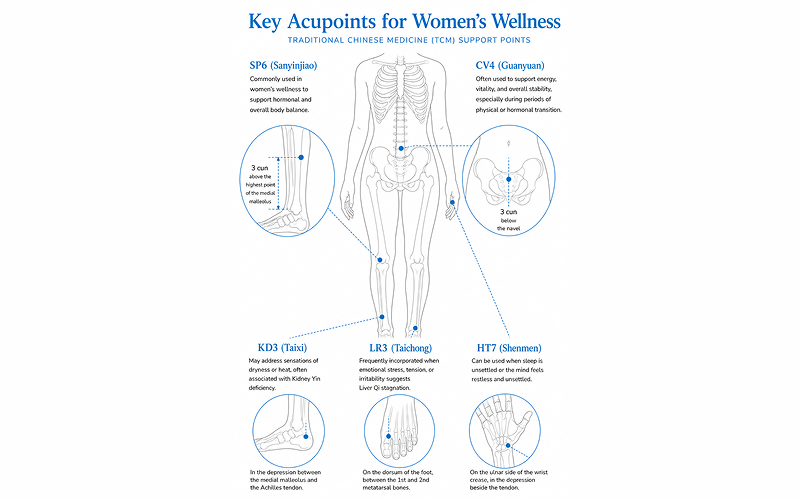
Acupuncture point selection is always guided by the overall presentation of symptoms, rather than by a standard protocol.
For instance:
- SP6 (Sanyinjiao) is frequently chosen in women’s health to support overall balance.
- KD3 (Taixi) may address sensations of dryness or heat, often associated with Kidney Yin deficiency.
- LR3 (Taichong) is often incorporated when emotional tension or irritability suggests Liver Qi stagnation.
- HT7 (Shenmen) can be used when sleep is unsettled or the mind feels restless.
- CV4 (Guanyuan) might be selected to bolster energy and stability, particularly during periods of transition.
These points are not employed as a fixed combination. Instead, each selection is carefully shaped by the interplay of different symptoms, reflecting an individual’s unique experience rather than a one-size-fits-all approach.
Other TCM Approaches That May Support Menopause
Acupuncture is typically integrated into a broader approach, rather than used in isolation. Within TCM for women’s health, care often incorporates herbal support, dietary guidance, and lifestyle adjustments, each tailored to the body’s responses during this transition.
Herbal formulations may be tailored to patterns such as internal heat, dryness, or fatigue, aiming to support long-term balance. Dietary guidance often centres on gentle nourishment and hydration, helping the body maintain equilibrium rather than become depleted. Small shifts, such as eating regular meals or reducing intake of overly stimulating foods and beverages, such as caffeinated drinks, spicy foods, and alcohol, can make a quiet yet noticeable difference.
Gentle therapies like tuina may also be incorporated to encourage circulation and ease tension, particularly when tightness or restlessness is experienced. Attention is also given to rest, sleep patterns, and stress levels, as these can influence the daily presentation of symptoms.
The aim is not to introduce everything simultaneously. Care is typically developed incrementally, adjusting as symptoms evolve, ensuring support remains aligned with the body’s specific needs at each stage.
What to Expect During Treatment Over Time
Each session typically begins with a consultation that explores beyond a simple list of symptoms. It considers patterns over time, including sleep, energy levels, and mood, observing when changes tend to occur throughout the day or night. This helps form a clearer picture of the body’s adjustments. Needle placement is then tailored based on these observations. Most people notice mild sensations during treatment, such as warmth, heaviness, or a gentle tingling that gradually settles.
Changes tend to unfold gradually. A single session may feel calming, offering a sense of ease or a slightly better night’s rest. More noticeable shifts usually develop over a series of visits. The experience varies. Some find their sleep becomes more settled, while others notice steadier energy or fewer episodes of warmth. Because responses vary, suitability also depends on how each individual experiences the transition.
Who May Benefit from Acupuncture for Menopause
Women experiencing frequent hot flushes or night sweats, especially when these disrupt sleep, may consider acupuncture. It is also an option for those with persistent sleep disruption during menopause, when restless nights affect energy levels the following day.
Some women notice mood changes that are linked to stress or emotional tension, while others are seeking a more natural form of menopause support alongside lifestyle adjustments. Moreover, some prefer a broader approach, considering how various symptoms interconnect rather than focusing solely on one concern.
When to Seek Medical Review Alongside TCM Care
While menopause is a natural transition, certain changes warrant closer investigation. Persistent fatigue, unexplained weight changes, or symptoms indicative of a thyroid imbalance, for example, should be further assessed rather than simply attributed to the transition.
Similarly, persistent sleep disruption, significant mood changes, or symptoms that begin to impact daily functioning may also necessitate medical attention. During perimenopause, any heavy or irregular bleeding warrants review to rule out other potential causes.
Seeking medical advice does not replace TCM care. Instead, it ensures that any underlying concerns are identified early, allowing supportive approaches to be integrated effectively with appropriate medical guidance.
Finding Support Through TCM Approaches
Menopause is a natural stage of life, though it does not always feel steady. Symptoms can come and go, shift in intensity, or show up in different ways, affecting sleep, mood, and overall comfort from one week to the next.
For those exploring acupuncture for menopause, the focus is not on isolating a single symptom. It is about supporting the body through a wider phase of change, recognising how different aspects are connected. Over time, this approach may help create a more manageable rhythm as the body adjusts.
At 1TCM, care begins with an individual assessment, where acupuncture may be combined with herbal support and lifestyle guidance depending on what the body needs. For those looking for a TCM clinic in a central location, such as Novena, or elsewhere in Singapore, care is available at the location most convenient for you.
If your symptoms feel persistent or difficult to manage, reach out to explore how a personalised care plan can support you through this transition.
FAQs About Acupuncture for Menopause
Does acupuncture help with hot flushes?
Acupuncture may be considered as part of managing heat-related discomfort. Rather than focusing on hot flushes alone, it looks at overall balance, which may influence how often they occur and how intense they feel.
How often should acupuncture be done for menopause symptoms?
There is no fixed schedule. Some begin with weekly sessions, then space them out based on how their bodies respond. Frequency is usually adjusted over time rather than set from the start. Our physician will typically assess the severity and pattern of symptoms before recommending a suitable treatment approach.
Can acupuncture help with sleep problems due to menopause?
Sleep is often part of the focus. By addressing factors such as restlessness, internal heat, or emotional tension, acupuncture may help support more settled and consistent sleep patterns.
Is acupuncture safe during menopause?
Acupuncture is generally well tolerated when carried out by trained physicians. Most people notice only mild sensations during treatment, while any concerns are discussed and monitored during consultation.
How long does it take to notice changes?
Some people notice small shifts early on, such as feeling more relaxed after a session. More noticeable changes usually build gradually across multiple visits, depending on how long symptoms have been present and how the body responds.