
Key Takeaways:
- Occasional spotting between periods may occur due to ovulation, hormonal fluctuations, stress, or a temporary cycle disruption, though persistent patterns may require closer assessment.
- The timing, colour, and consistency of unexpected bleeding can provide useful clues about hormonal balance, circulation, reproductive health, and menstrual stability.
- From a TCM perspective, irregular bleeding patterns may be linked to disruptions involving Qi, blood circulation, stress regulation, or broader organ balance rather than a single isolated issue.
- Monitoring menstrual changes across several cycles can help identify recurring patterns earlier, particularly when fertility planning, pelvic discomfort, or ongoing cycle irregularities are involved.
Spotting Between Periods: What Your Body May Be Trying to Tell You
Unexpected bleeding outside your regular period can feel confusing, especially when it happens more than once or begins appearing without a clear pattern. Some women may notice light spotting briefly around ovulation or before menstruation, while others experience recurring episodes that leave them wondering whether stress, hormonal changes, or underlying cycle irregularities could be involved.
Although occasional spotting may sometimes occur as part of a temporary hormonal fluctuation, persistent or repeated bleeding between periods can signal that the menstrual cycle is not regulating as smoothly as it should. The timing, colour, texture, and frequency of spotting often provide useful insight into what may be happening within the body.
From a Traditional Chinese Medicine (TCM) perspective, menstrual health reflects more than reproductive function alone. The menstrual cycle is viewed in relation to the balance of Qi, blood circulation, stress regulation, digestion, sleep, and overall body harmony. Rather than focusing only on the spotting itself, TCM looks at the broader pattern surrounding the cycle to understand what the body may be trying to communicate.
What Counts as Spotting Between Periods?
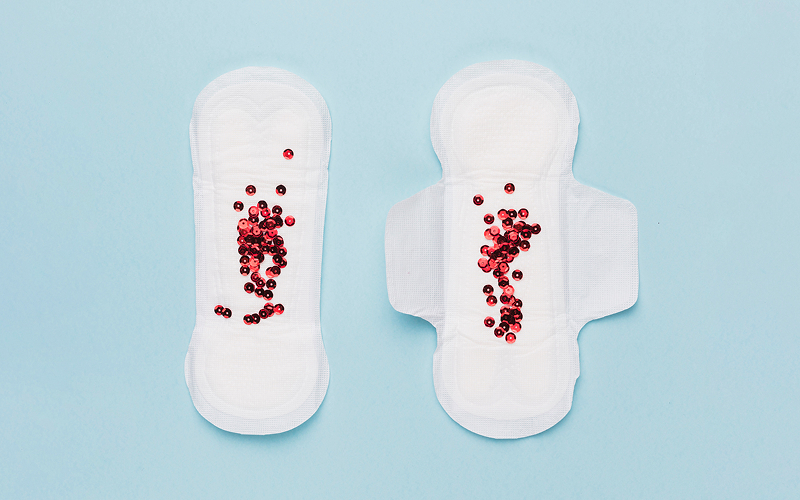
Spotting refers to light bleeding that occurs outside of a regular menstrual flow. It is typically lighter than a normal period and may appear as:
- Pink discharge
- Light red spotting
- Dark red bleeding
- Brown discharge
Unlike a full menstrual period, spotting may last only a few hours or continue for several days. Some women notice it around ovulation, while others experience unexpected bleeding at irregular points throughout the month.
The timing of spotting often matters just as much as the bleeding itself. Light bleeding around ovulation may reflect temporary hormonal fluctuations, while spotting before menstruation can occasionally suggest changes in how the second half of the cycle is regulated. When spotting occurs unpredictably throughout the cycle, it may indicate broader hormonal or reproductive irregularities.
Because these patterns can vary from person to person, tracking when spotting occurs, how long it lasts, and whether it changes over time can provide a clearer picture of what the body may be signalling.
When Spotting May Sometimes Be Considered Normal
Not every episode of spotting automatically points to a serious underlying issue. In some cases, temporary hormonal fluctuations or short-term changes within the body can lead to light bleeding between periods. The key difference is often whether the spotting occurs occasionally and resolves on its own, or becomes a recurring, increasingly unpredictable pattern over time.
Ovulation Spotting
Some women notice light mid-cycle bleeding when the egg is released. This may occur due to temporary shifts in oestrogen levels during ovulation. In most cases, ovulation spotting tends to be light, short-lived, and appears roughly halfway through the menstrual cycle rather than close to menstruation itself. It is usually not accompanied by heavy bleeding or prolonged discomfort, although some women may notice mild cramping or temporary pelvic sensations around the same time.
Hormonal Contraception Changes
Starting, stopping, missing doses, or changing hormonal contraception can temporarily affect the uterine lining and alter the body’s hormonal rhythm. As the body adjusts, some women may experience irregular spotting between periods, particularly during the first few months. This can happen with oral contraceptive pills, hormonal IUDs, injections, or other hormone-based methods. In many cases, the spotting settles gradually as hormonal patterns stabilise.
Stress and Lifestyle Disruption
Physical and emotional stress can influence the hormonal signalling involved in ovulation and menstruation. Sleep disruption, travel, illness, excessive exercise, restrictive dieting, sudden weight changes, or ongoing emotional strain may all affect the consistency of menstrual cycle regulation. For some women, these disruptions may lead to temporary spotting, delayed menstruation, or shorter and longer cycles than usual.
Implantation Bleeding
In early pregnancy, some women experience very light spotting when the fertilised embryo attaches to the uterine lining. This is commonly referred to as implantation bleeding. It is generally lighter and shorter than a regular menstrual flow and may appear as faint pink or brown spotting rather than bright red bleeding. Because implantation bleeding can sometimes occur close to an expected period date, it may occasionally be mistaken for the beginning of menstruation.
Still, spotting that becomes frequent, increasingly heavy, painful, or consistently irregular should not simply be dismissed, particularly when the pattern continues across multiple cycles.
Common Period Spotting Causes
There are many possible causes of period spotting, and the underlying reason often depends on when it occurs, how frequently it happens, and whether other symptoms accompany it. In some women, spotting may stem from temporary hormonal fluctuation, while in others it may reflect broader reproductive or menstrual irregularities.
Hormonal Imbalance
Hormones play a central role in regulating the thickening and shedding of the uterine lining throughout the menstrual cycle. When hormonal signalling becomes inconsistent, unexpected bleeding or spotting can sometimes occur between periods.
This may be associated with factors such as irregular ovulation, ongoing stress, thyroid dysfunction, perimenopause, or conditions like PCOS. In some cases, hormonal imbalance may also affect cycle length, menstrual flow, mood, or ovulation timing.
Uterine Conditions
Structural conditions affecting the uterus may also contribute to irregular bleeding patterns. Fibroids, polyps, adenomyosis, and endometriosis can sometimes interfere with the normal shedding process of the uterine lining, leading to spotting between periods.
Depending on the condition, some women may also experience pelvic pressure, painful periods, heavier menstrual flow, or discomfort during intercourse.
Cervical Irritation or Infection
Spotting that occurs after intercourse or alongside unusual discharge, pelvic discomfort, or irritation may sometimes be linked to cervical inflammation or infection. Minor irritation of the cervix can occasionally cause light bleeding, particularly when the tissue becomes more sensitive.
Because infections and cervical-related conditions can present differently from person to person, persistent symptoms should not be ignored.
Luteal Phase Instability
Spotting before menstruation may sometimes reflect insufficient progesterone support during the second half of the cycle, known as the luteal phase. When progesterone levels are not adequately maintained, the uterine lining may begin shedding earlier than expected, resulting in premenstrual spotting.
This type of spotting may become more noticeable in women who are also tracking ovulation or trying to conceive.
Stress-Related Cycle Disruption
The menstrual cycle is closely connected to the nervous system and stress response. Ongoing emotional strain, overexertion, poor sleep, chronic fatigue, or significant lifestyle disruption may all influence hormonal regulation over time.
When stress becomes prolonged, some women may notice changes such as delayed periods, lighter menstrual flow, irregular ovulation, or intermittent spotting between cycles.
What Spotting Between Periods May Suggest
The colour and appearance of menstrual spotting can sometimes provide additional clues about how the bleeding is occurring and how long the blood has been retained before leaving the body. While colour alone does not confirm a diagnosis, it may help provide context when considered alongside cycle timing, flow pattern, and accompanying symptoms.
Bright Red Spotting
Bright red spotting usually reflects fresher blood and may suggest more active or recent bleeding. This type of spotting may appear closer to ovulation, due to hormonal fluctuations, cervical irritation, or the onset of menstrual flow.
Dark Red or Purple Spotting
Darker red or purplish spotting may indicate that the blood has remained in the uterus slightly longer before exiting the body. In some cases, slower circulation or delayed shedding of the uterine lining may contribute to this appearance.
Brown Spotting
Brown spotting between periods is commonly associated with older blood that has taken longer to leave the uterus. Because the blood has had more time to oxidise before exiting the body, it often appears brown rather than bright red.
This type of spotting may sometimes occur:
- At the beginning or end of menstruation
- After ovulation
- Before the next period begins
- During lighter or slower bleeding patterns
Occasional brown spotting may not always indicate a serious concern. However, persistent spotting across multiple cycles, particularly when accompanied by pelvic discomfort, irregular menstruation, heavy bleeding, or fertility concerns, may warrant closer assessment.
How TCM Interprets Irregular Bleeding
In TCM, menstrual health is viewed as a reflection of how smoothly Qi, blood, and the body’s internal organ systems are functioning together. Spotting outside the regular menstrual cycle is often interpreted as a sign that blood circulation or cycle regulation is not flowing harmoniously.
Rather than focusing solely on the bleeding itself, physicians typically assess the broader menstrual and bodily patterns surrounding the symptom. This may include when the spotting occurs within the cycle, the colour and consistency of the bleeding, associated discomfort, stress levels, digestion, sleep quality, energy patterns, and emotional wellbeing.
This pattern-based TCM approach allows irregular bleeding to be interpreted differently based on the individual’s overall presentation.
Blood Heat
In TCM, internal heat is believed to accelerate blood flow, which may contribute to spotting between periods or heavier menstrual bleeding. Women with this pattern may notice brighter red spotting, sensations of internal heat, irritability, restlessness, or a tendency towards heavier menstrual flow.
Stress, lack of rest, emotional strain, or dietary habits that contribute to excessive internal heat may sometimes contribute to this presentation.
Lifestyle and Dietary Support
Spleen Qi Deficiency
In TCM, the Spleen is associated with the body’s ability to contain and regulate blood within the vessels. When Spleen Qi becomes weakened, the body may struggle to “hold” blood properly, which can contribute to prolonged light spotting or bleeding that lingers beyond the expected menstrual period.
This pattern is often associated with symptoms such as fatigue, low energy, bloating, poor appetite, loose stools, or a general sense of physical heaviness and exhaustion.
Liver Qi Stagnation
TCM closely associates emotional stress and tension with the smooth movement of Liver Qi. When this flow becomes disrupted, menstrual regulation may also become affected.
Women with Liver Qi stagnation patterns may experience irregular spotting alongside mood fluctuations, breast tenderness, abdominal tightness, irritability, or menstrual changes that worsen during periods of stress or emotional strain.
Blood Stasis
When blood circulation becomes sluggish or obstructed in TCM theory, spotting may appear darker, thicker, or clot-like in nature. Blood stasis patterns are often associated with more fixed or painful symptoms rather than light fluctuation alone.
Some women may also experience painful periods, sharp pelvic discomfort, dark menstrual flow, clotting, or irregular cycle timing alongside the spotting pattern.
How TCM May Support Cycle Regulation
TCM care for menstrual irregularities is typically tailored to the individual’s overall constitution rather than to spotting patterns alone. Treatment approaches are adjusted based on factors such as cycle timing, menstrual flow characteristics, stress levels, energy patterns, digestion, sleep quality, and reproductive goals.
Acupuncture
Acupuncture may be used to support the regulation of Qi and blood circulation within the body. In women’s health and fertility-related care, it is often explored as part of managing menstrual irregularities, stress-related cycle disruption, ovulation concerns, and broader reproductive balance.
The way acupoints are chosen is usually subjected to the underlying pattern of the patient’s body constitution. For instance some points like Guan Yuan (关元), Zhong Ji (中极) and San Yin Jiao (三阴交) are typically used to help with problems and support reproductive health. When we see Damp-Heat issues we might add points like Qu Chi (曲池) and He Gu (合谷) to help clear the heat and get the blood flowing properly.
For women who have Kidney Yin Deficiency issues we might choose points like Tai Xi (太溪) and Qi Xue (气穴) to help nourish and balance their system. If we are dealing with Blood Stasis issues we could use points like Xue Hai (血海) and Wai Guan (外关) to help get the blood moving and relieve the discomfort or irregular flow that can come with clotting. We use these acupoints to support the health of women specifically to help with regulation and reproductive support and to address issues, like Damp-Heat and Blood Stasis patterns and Kidney Yin Deficiency patterns.
Treatment plans are usually adjusted based on the stage of the menstrual cycle, accompanying symptoms, stress patterns, and individual fertility considerations, rather than following a fixed approach for every patient.
Women seeking support through a TCM fertility clinic in Singapore, like 1TCM, may sometimes explore acupuncture alongside broader fertility planning, particularly when irregular cycles, ovulation instability, or recurrent spotting are affecting menstrual predictability.
Chinese Herbal Medicine
Chinese herbal medicine is prescribed based on the underlying pattern identified during the consultation. Rather than targeting the spotting symptom alone, herbal formulations are selected to address the broader internal imbalance believed to be contributing to the menstrual irregularity.
Depending on the presentation, formulations may include herbs traditionally associated with patterns involving Blood Heat, Qi deficiency, Liver Qi stagnation, or blood stasis. Herbs such as Sheng Di Huang (生地黄, Rehmannia Root), Huang Qi (黄芪, Astragalus Root), Chai Hu (柴胡, Bupleurum Root), or Dan Shen (丹参, Salvia Root) may sometimes appear within broader customised prescriptions, though they are generally used as part of combined formulas rather than as standalone remedies.
Because herbal prescriptions are individualised, formulations are often adjusted over time as cycle patterns and symptoms change.
Lifestyle and Dietary Support
Daily habits can also influence menstrual regulation over time. Within TCM, lifestyle guidance is often included alongside acupuncture or herbal care to support more stable menstrual cycle patterns and overall balance in the body.
Recommendations may include improving sleep consistency, reducing prolonged exposure to stress, maintaining regular meal times, avoiding excessive exhaustion, and moderating foods considered overly heating or disruptive to digestion and circulation. In some cases, adjustments are also made according to the individual’s constitution and menstrual presentation rather than applying broad dietary rules universally.
Can Spotting Between Periods Affect Fertility?
Occasional spotting does not always directly affect fertility. However, when spotting becomes persistent or recurrent, it may sometimes reflect underlying cycle irregularities that influence ovulation timing, hormonal balance, or the stability of the uterine lining during implantation.
For some women, very early ovulation may shorten the follicular phase, which can affect how much time the egg has to mature before it is released. Spotting before menstruation may also suggest changes within the luteal phase, particularly if progesterone support during the second half of the cycle becomes less stable. In other cases, irregular ovulation may make fertile windows harder to predict consistently from month to month.
Because these patterns are not always obvious from menstruation alone, women trying to conceive often benefit from observing broader changes in their cycles over time. Tracking cycle length, ovulation timing, spotting frequency, menstrual flow patterns, and basal body temperature can sometimes provide a clearer picture of how regularly the cycle is functioning.
At a TCM women’s health clinic, like 1TCM, menstrual irregularities are generally assessed alongside broader reproductive health patterns rather than viewed as isolated symptoms. Factors such as stress, sleep, digestion, energy levels, and overall cycle consistency are often considered together when evaluating fertility-related concerns.
When Should You Seek Further Assessment?
When spotting transitions from a single, isolated episode to a more consistent pattern across multiple cycles, further assessment may be worthwhile.
This may include situations where spotting is accompanied by:
- Heavy bleeding between periods
- Pelvic pain or unusual discharge
- Bleeding after intercourse
- Significant menstrual irregularity
- Fatigue, weakness, or dizziness
- Ongoing fertility concerns or difficulty tracking ovulation
Changes that continue across multiple cycles are often more meaningful than a single isolated episode. Tracking symptoms over time, including the timing, colour, duration, and frequency of spotting, can help determine whether a temporary fluctuation is gradually becoming a more consistent pattern.
Women seeking cycle-related support may also explore care at 1TCM’s clinic at Novena, particularly when menstrual irregularities begin affecting overall wellbeing, reproductive health, or fertility planning.

Understanding What Your Cycle May Be Signalling
Unexpected spotting can sometimes feel easy to brush aside, especially when it appears light, brief, or inconsistent. Yet when bleeding patterns recur across multiple cycles, they may offer important insight into how the body regulates hormones, ovulation, circulation, and overall menstrual health.
Understanding the possible medical and TCM perspectives behind spotting between periods may help women recognise cycle changes earlier, rather than dismissing them as random fluctuations. Over time, paying attention to timing, frequency, accompanying symptoms, and broader health patterns can provide a clearer understanding of what the body may be trying to communicate.
At 1TCM, menstrual health assessments look beyond the bleeding itself to consider broader factors such as cycle consistency, reproductive health, stress levels, sleep quality, digestion, and overall wellbeing. For women experiencing recurring spotting, irregular cycles, or fertility-related concerns, a more individualised approach may help provide greater clarity into the underlying cycle pattern.
If you have been noticing persistent spotting, unexplained menstrual changes, or ongoing cycle irregularities, scheduling a consultation with 1TCM may help you understand the possible factors affecting your menstrual and reproductive health.
FAQs About Spotting Between Periods
Is spotting between periods always abnormal?
Not necessarily. Occasional spotting can sometimes occur around ovulation, during hormonal shifts, or during periods of increased physical or emotional stress. In many cases, a single isolated episode may not indicate a significant underlying issue. However, spotting that becomes persistent, recurrent, or increasingly irregular across multiple cycles is generally more worthwhile to assess.
Can stress cause spotting between periods?
Yes. Ongoing stress may affect the hormonal signalling involved in ovulation and menstrual regulation. Physical exhaustion, poor sleep, emotional strain, illness, or major lifestyle disruption can all affect the consistency of the menstrual cycle. Over time, this may contribute to irregular bleeding, delayed menstruation, or unexpected spotting between periods.
Is brown spotting between periods a cause for concern?
Not always. Brown spotting often reflects older blood leaving the body more slowly, rather than fresh active bleeding. It may appear before or after menstruation, around ovulation, or during lighter flow patterns. Still, persistent or repeated brown spotting across multiple cycles may warrant closer assessment, particularly when accompanied by pelvic discomfort, significant cycle irregularity, or fertility concerns.
Does mid-cycle bleeding mean ovulation is happening?
Sometimes. Light bleeding around the middle of the cycle may occur during ovulation due to temporary hormonal fluctuation as the egg is released. However, repeated or unpredictable mid-cycle bleeding should still be monitored, especially if menstrual timing becomes increasingly irregular or other symptoms begin developing alongside the spotting.
Can irregular spotting affect fertility?
In some cases, yes, depending on the underlying cause. Spotting associated with irregular ovulation, luteal phase instability, or broader hormonal imbalance may influence cycle timing, ovulation predictability, or implantation conditions. This is why persistent spotting is sometimes assessed alongside overall menstrual health and fertility planning rather than viewed as an isolated symptom alone.